
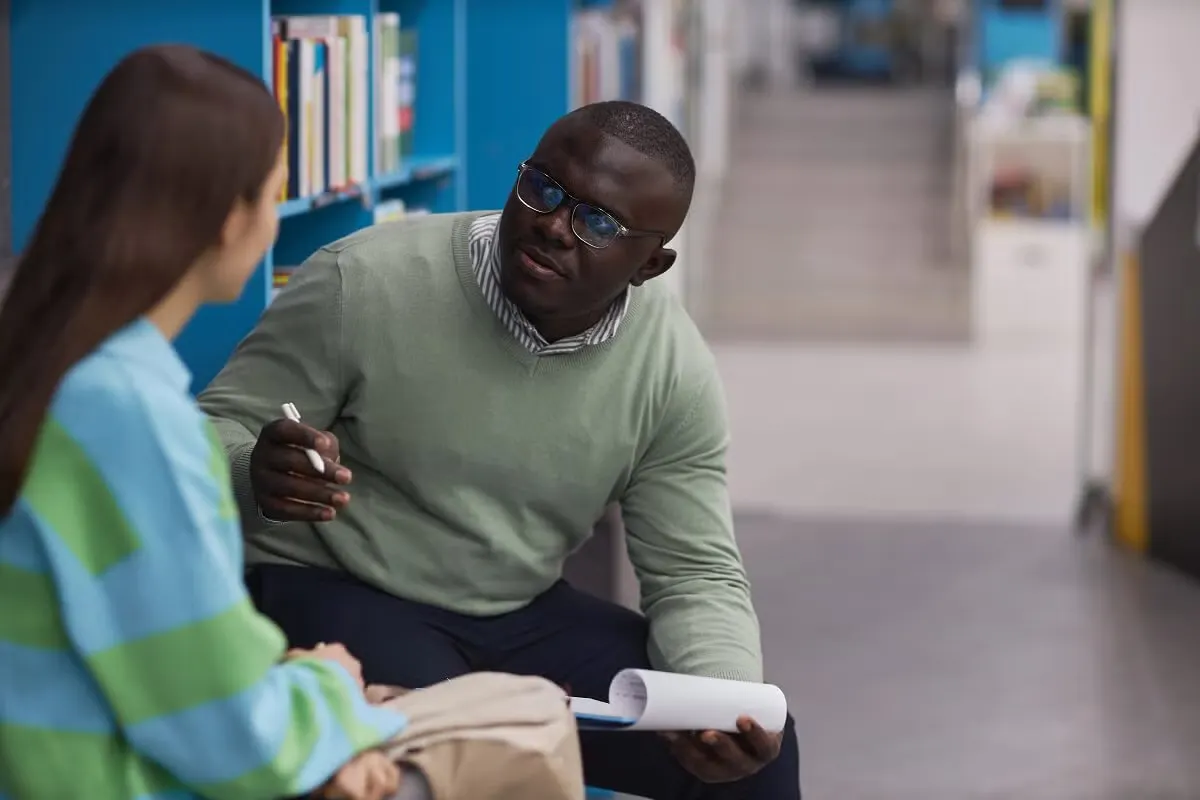
Becoming a school counselor in California is less about choosing a counseling degree in general and more about choosing the right credential pathway.
California public schools require school counselors to hold a Pupil Personnel Services (PPS) Credential with a specialization in School Counseling. The strongest graduate programs build that credential directly into the degree, giving students the coursework, supervised school experience, and university recommendation needed to move into K–12 counseling after graduation.
That requirement shaped this ranking. We looked first at whether a program provides a clear route to the California PPS School Counseling credential. From there, we compared fieldwork, curriculum, cost, schedule, accreditation, specialization opportunities, and how well each program prepares students for the actual work school counselors do: academic planning, social-emotional support, college and career readiness, crisis response, family collaboration, and schoolwide intervention.
Best School Counseling Programs in California at a Glance
| Rank | School | Degree | Format | PPS School Counseling Credential | Notable Feature |
|---|---|---|---|---|---|
| 1 | San Diego State University | M.S. in School Counseling | On campus | Included | Two-year, 60-unit program |
| 2 | San Francisco State University | M.S. in Counseling, School Counseling | On campus | Included | CACREP-accredited, equity-focused |
| 3 | CSU Long Beach | M.S. in School Counseling | On campus | Included | Strong urban school counseling focus |
| 4 | CSU Northridge | M.S. in Counseling, School Counseling | On campus | Included | Can also support LPCC preparation |
| 5 | Sacramento State | M.S. in Counseling, School Counseling | On campus | Embedded | CACREP-accredited; 800 hours of field experience |
| 6 | University of Southern California | M.Ed. in School Counseling | Online | Included | Online with local field placements |
| 7 | Cal State LA | M.S. in Counseling, School-Based Family Counseling | On campus | Included | PPS, CWA, LMFT and LPCC preparation |
| 8 | California Baptist University | M.S. in School Counseling | See current program format | Included | Private-university option in Southern California |
How we ranked the programs
This ranking prioritizes programs designed specifically for school counseling in California. A school received more weight when the PPS credential is built directly into the graduate curriculum, the program provides substantial K–12 fieldwork, and the curriculum addresses the academic, career, mental health, and systems-level responsibilities of modern school counselors.
Cost and flexibility also matter, but neither outweighs credential eligibility. A cheaper or fully online counseling master’s is of limited value to a California applicant if it does not provide a workable route to the PPS School Counseling credential.
1. San Diego State University — M.S. in School Counseling
San Diego State University’s school counseling program is unusually straightforward: 60 units, two years, a Master of Science in School Counseling, and the California PPS credential built into the program.
That combination puts SDSU at the top of our list.
Students are trained to build comprehensive counseling programs rather than simply provide one-on-one counseling when a student is struggling. The curriculum centers on academic development, career planning, personal and social development, educational access, advocacy, program evaluation, and the removal of barriers that keep students from succeeding in school.
SDSU frames school counselors as leaders and systems-change agents. That language can sound abstract until you look at what the job has become. Today’s school counselors may be involved in college access initiatives, attendance interventions, mental health support, crisis response, academic planning, family outreach, and schoolwide programs in addition to individual counseling.
The two-year structure is another advantage. Many California counseling programs require closer to three years, particularly when credential coursework and field experience are incorporated into a broader counseling degree.
SDSU’s program is not designed as a general clinical counseling degree with school counseling added on later. Students enter specifically to prepare for professional work in schools.
For someone committed to a K–12 counseling career in Southern California, that focus keeps the degree aligned with the job from the beginning.
Why we ranked it first: A direct two-year route to both the master’s degree and California PPS credential, combined with a curriculum centered specifically on comprehensive school counseling.
2. San Francisco State University — School Counseling & PPS Credential
San Francisco State approaches school counseling through a broader counseling framework while still keeping the K–12 role at the center of the specialization.
Its school counseling program prepares master’s-level counselors to develop data-driven, multi-tiered services for PK–12 students. Rather than defining counseling narrowly, SFSU trains students to address academic progress, social-emotional development, career preparation, prevention, intervention, family relationships, and school systems.
The program requires at least 60 graduate units and is aligned with California’s current PPS School Counseling standards.
It is also nationally accredited through CACREP.
That combination is notable because California credential approval and CACREP accreditation are different things. The California Commission on Teacher Credentialing determines whether a preparation program can recommend candidates for the PPS credential. CACREP is a national specialized accreditor for counseling programs.
SFSU offers both.
The program’s emphasis on culturally responsive practice is also more central than a single diversity course. Students are prepared to work in schools serving populations with widely different cultural backgrounds, economic circumstances, family structures, identities, and access to educational resources.
That is especially relevant in the Bay Area, where school counselors may work with students navigating everything from competitive college admissions to housing instability, immigration concerns, family financial stress, and unmet mental health needs.
SFSU is a strong option for applicants who want professional counselor training without separating counseling from larger questions about educational equity and student access.
Why it ranks highly: California credential alignment, CACREP accreditation, a strong counseling core, and preparation for schoolwide as well as individual interventions.
3. California State University, Long Beach — M.S. in School Counseling
CSU Long Beach has built its school counseling program around the realities of working in large, diverse K–12 systems.
The 60- to 66-unit M.S. in School Counseling allows students to complete the master’s degree and PPS School Counseling credential concurrently. The program is approved by the California Commission on Teacher Credentialing and uses the American School Counselor Association model as a foundation for its curriculum.
Its course list gives a good picture of the training.
Students study subjects including:
- career and academic counseling
- law and ethics
- cross-cultural counseling
- college access
- multi-tiered systems of support
- mental health and crisis response
- school counseling curriculum design
- group counseling
- consultation
- research and program evaluation
That is a more expansive view of school counseling than many prospective students initially expect.
CSULB also deserves attention for cost. The university reported an approximate total program cost of about $21,266 for California residents as of Fall 2025, although tuition and fees should always be checked for the academic year in which you plan to enroll.
Private school counseling master’s programs can cost several times that amount.
Classes are generally scheduled on weekday evenings, which gives working students some flexibility. The limitation comes when field training begins: practicum and fieldwork take place during normal K–12 school hours.
That distinction is easy to overlook. A graduate program can offer evening classes and still become difficult to combine with a conventional full-time daytime job once school-based training starts.
CSULB also describes admission as highly competitive.
Why it ranks here: Strong public-university value, explicit PPS preparation, and a curriculum that goes beyond individual counseling into college access, crisis response, MTSS, research, and systemic school improvement.
4. California State University, Northridge — M.S. in Counseling, School Counseling
CSUN is a particularly interesting choice for students who want to work in schools but would rather earn a broader counseling degree than a narrowly defined education credential.
Its M.S. in Counseling with an option in School Counseling prepares graduates to work as counselors in PreK–12 settings and qualifies completers for California’s PPS School Counseling credential.
School-based experience is integrated throughout the program. The curriculum addresses students’ academic, career, social, emotional, and personal development while training counselors to create comprehensive, results-oriented counseling programs.
There is another layer to the degree: clinical counseling preparation.
CSUN notes that graduates interested in psychotherapy can pursue the additional requirements associated with becoming a Licensed Professional Clinical Counselor in California. Clinical coursework and fieldwork are incorporated into the degree, although LPCC licensure still requires post-graduate supervised experience and state licensing requirements beyond completion of the master’s program.
That flexibility creates a different value proposition from SDSU or CSULB.
Someone certain that they want to spend an entire career in K–12 schools may not need the additional clinical dimension. Someone who likes school counseling but wants to preserve a future path toward clinical practice may prefer having those options closer together.
CSUN’s program is full time and primarily campus based, with courses offered during both daytime and evening hours.
Best for: Students who want California PPS preparation while maintaining a possible longer-term route into professional clinical counseling.
5. Sacramento State — M.S. in Counseling, School Counseling
Sacramento State asks for a larger time commitment than some of the programs above, but it also provides one of the more substantial counseling training experiences on this list.
The school counseling concentration is a 60-unit, three-year, full-time program with the PPS School Counseling credential embedded in the degree.
Students complete a 100-hour clinical practicum and 800 hours of field experience.
The program uses a cohort model, so students move through the curriculum with the same group rather than assembling courses independently each semester. Training includes counseling theory, assessment, career development, diagnosis and treatment planning, substance use, trauma, crisis counseling, legal and ethical issues, social justice, counseling children and adolescents, school counseling program administration, and systemic change.
Sacramento State’s counseling concentrations are CACREP-accredited, and its School Counseling program is also approved by the California Commission on Teacher Credentialing.
There is also an optional clinical route. School counseling students can complete an additional course to satisfy educational requirements associated with California LPCC preparation.
Field training is a major part of the program. Sacramento State reports both school-based placement opportunities and access to an on-campus counseling training center where students can receive feedback on counseling work.
The drawback is scheduling flexibility. This is not structured as a degree that students casually fit around a separate full-time career. The program describes itself as full time and in person.
For applicants able to make that commitment, the breadth of counselor preparation is substantial.
Best for: Students in Northern California who want intensive counselor training, CACREP accreditation, extensive fieldwork, and an embedded PPS credential.
6. University of Southern California — M.Ed. in School Counseling
USC offers something most of the public programs in this ranking do not: a California school counseling credential pathway delivered primarily online.
The Master of Education in School Counseling is offered through USC Rossier and prepares students to be recommended for California’s PPS School Counseling credential. Coursework is online, while practicum and fieldwork are completed in schools.
That makes geography less restrictive.
Students do not need to live close enough to Los Angeles to commute to campus several times per week. USC’s field-placement team works with students to identify appropriate training sites near their communities.
The program includes a 100-hour practicum followed by 700 hours of fieldwork across two terms.
USC’s curriculum covers academic and social-emotional counseling, college and career development, student wellbeing, school counseling program design, and the organizational side of working within educational systems.
The online format also offers full-time and part-time study options.
Cost is the obvious counterweight.
USC is a private university, and students should compare its total tuition carefully with California State University programs that lead to the same PPS credential for a much lower sticker price.
What students are paying for is not a different state credential. The potential value comes from the online structure, field-placement support, USC network, and ability to remain in another part of California while completing the academic portion of the degree.
Best for: Students who need an online California PPS pathway and are willing to pay a private-university premium for flexibility.
7. Cal State LA — M.S. in Counseling, School-Based Family Counseling
Cal State LA is the outlier in this ranking because it does not treat school counseling as an isolated professional track.
Instead, its School-Based Family Counseling program integrates school counseling and family therapy training.
Students complete an M.S. in Counseling while preparing for the PPS School Counseling credential and the Child Welfare and Attendance authorization. The coursework can also satisfy educational requirements associated with California LMFT and LPCC pathways.
That creates one of the broadest professional preparation packages among California counseling programs.
The reasoning behind the curriculum is that a child’s school performance rarely exists in isolation. Family relationships, mental health, housing, community resources, behavioral concerns, attendance, and other outside systems can all affect what happens in the classroom.
Students therefore train not only to support individual pupils but to work with families and the wider systems surrounding them.
Cal State LA even operates a School-Based Family Clinic where advanced graduate students provide supervised counseling to community members.
This is not the right degree for everyone seeking a school counseling credential. The program is longer and clinically broader than necessary if your only goal is conventional K–12 counseling.
For someone who sees school counseling, family intervention, mental health, and child welfare as closely connected, however, the additional training may be exactly what they want.
Best for: Students who want to combine school counseling with family-systems and clinical training rather than choose only one professional direction.
8. California Baptist University — M.S. in School Counseling
California Baptist University provides another Southern California pathway to an M.S. in School Counseling and PPS credential.
The curriculum is built around the academic, career, personal, and social development of K–12 students. Students learn counseling skills alongside strategies for collaborating with families, educators, school personnel, and other professionals involved in student support.
CBU’s program may be especially relevant to applicants who prefer a smaller private-university environment over a large CSU campus.
That choice should be made deliberately.
For most California students, the strongest argument for attending a private school counseling program is not that the resulting state credential is superior. It is whether the school offers some combination of schedule, location, educational environment, cohort size, faculty access, or institutional fit that justifies the additional cost.
California Baptist is also a Christian university. Applicants should consider whether that institutional setting fits what they want from graduate education rather than treating it as incidental.
Best for: Southern California students looking for a private, faith-based school counseling program that leads to PPS credential preparation.
What Does California Require to Become a School Counselor?
California regulates school counselors differently from independently licensed mental health counselors.
The key credential is the Pupil Personnel Services Credential with a specialization in School Counseling, issued by the California Commission on Teacher Credentialing.
For individuals completing their preparation in California, current requirements include a bachelor’s degree or higher and completion of a Commission-approved post-baccalaureate professional preparation program in school counseling. The program must contain at least 48 semester units or 72 quarter units and include practicum experience with school-age children.
Graduates must also receive a formal recommendation from their Commission-approved California college or university and satisfy the remaining credentialing requirements, including fingerprint clearance and the application process.
The cleanest route for most students is therefore to enroll in a master’s program where PPS preparation is already embedded.
Trying to piece together a counseling master’s and credential requirements separately can create unnecessary complications.
What Does a School Counselor Actually Do?
School counseling has changed considerably from the old image of a guidance counselor whose primary job was helping high school seniors apply to college.
College and career planning remain important, but the role now spans much more of a student’s educational experience.
Depending on the grade level and school, counselors may:
- help students create academic plans
- provide individual and group counseling
- teach classroom lessons
- help students explore colleges and careers
- respond to mental health concerns
- participate in crisis intervention
- support attendance initiatives
- identify barriers affecting student achievement
- collaborate with parents and caregivers
- consult with teachers and administrators
- connect families with outside services
- use school data to identify achievement and opportunity gaps
- develop schoolwide prevention and intervention programs
The California PPS credential explicitly authorizes school counselors to develop and evaluate counseling programs covering academic, career, personal, and social development while providing prevention, intervention, consultation, and advocacy services.
That broader role is why program curriculum matters.
A degree centered almost entirely on individual counseling would leave gaps in preparation for program development, educational systems, college access, data use, and schoolwide interventions.
PPS Credential vs. LPCC: What’s the Difference?
These credentials are easy to confuse because both can involve counseling.
They authorize different types of professional practice.
PPS School Counseling Credential
The PPS credential is an education credential. It allows qualified professionals to serve as school counselors in California K–12 schools.
Preparation focuses heavily on:
- student academic development
- college and career readiness
- social-emotional support
- educational systems
- consultation
- school counseling programs
- prevention and intervention
Licensed Professional Clinical Counselor
An LPCC is a mental health license administered through the California Board of Behavioral Sciences.
LPCCs provide clinical assessment, diagnosis, counseling, and psychotherapy within the scope of California law.
Some graduate programs—such as CSUN and Sacramento State—make it possible for school counseling students to complete coursework that also contributes toward LPCC eligibility.
That can be useful, but it is not necessary simply to work as a California school counselor.
If your goal is exclusively K–12 school counseling, prioritize PPS preparation. If you can imagine eventually practicing psychotherapy outside school settings, look more closely at programs that preserve both pathways.
How Much Do School Counselors Earn?
National wage data combine school counselors with career counselors and advisors, so salary figures should be read as a broad benchmark rather than a guaranteed California school salary.
According to the U.S. Bureau of Labor Statistics, school and career counselors and advisors earned a median annual wage of $64,330 in May 2025.
The setting makes a significant difference. BLS reported a median of $77,800 for counselors working in local elementary and secondary schools, compared with $62,190 in private elementary and secondary schools.
California public-school compensation is often determined through district salary schedules rather than a single statewide salary figure.
That means two school counselors with similar experience can earn different salaries depending on district, region, bargaining agreements, education level, and years of service.
When comparing graduate program cost, applicants should look at actual school counselor salary schedules in districts where they may eventually want to work.
How to Choose Between California School Counseling Programs
Ranking schools can narrow the list, but several practical questions matter more than whether a program sits at number two or number five.
Is the PPS credential embedded?
This should be the first question.
If you plan to work as a school counselor in California, choose a program that clearly explains how graduates become eligible for the PPS School Counseling credential.
Do not assume that every master’s degree with “school counseling” in its name automatically provides California credential eligibility.
Where will you complete fieldwork?
Fieldwork is not a small piece of the degree.
Some programs require 700 to 800 hours of supervised experience in addition to earlier practicum work. Even when academic courses are held at night or online, those field experiences usually happen while K–12 schools are open.
Ask where students are typically placed, how sites are selected, and whether the university helps arrange them.
Can you realistically attend full time?
A two- or three-year master’s program can look manageable until fieldwork begins.
Evening classes do not eliminate daytime training commitments.
Students planning to continue full-time employment should map the entire program schedule rather than only looking at first-semester courses.
Do you want clinical licensure later?
If psychotherapy outside the school system is a realistic future goal, programs such as CSUN, Sacramento State, or Cal State LA deserve closer attention.
If not, additional clinical coursework may simply extend a degree that could otherwise remain focused on school counseling.
How much debt does the program require?
The professional credential does not become more powerful because it came from a more expensive university.
California’s public universities offer several strong PPS programs at substantially lower tuition than many private alternatives.
Paying more can still be reasonable when an online format, geographic flexibility, institutional network, or specific training model solves a real problem. The comparison should be made against the actual additional value you receive.
Our Take
California has enough strong school counseling programs that most applicants do not need to choose between credential eligibility and program quality.
San Diego State takes our top spot because its two-year, 60-unit structure provides an unusually direct path to the master’s degree and PPS credential.
San Francisco State is an excellent alternative for students who value CACREP accreditation and a strong equity-centered counseling model. CSU Long Beach combines depth with relatively strong public-university value, while CSUN and Sacramento State make sense for students who may want a bridge between school counseling and clinical counseling.
The choice changes when flexibility becomes the priority. USC gives students an online academic format with local field placement, although at a much higher private-school cost.
And for students who see school counseling as inseparable from family and clinical work, Cal State LA’s School-Based Family Counseling program offers a distinctly different route.
Whatever program you choose, verify the credential pathway first. In California, the degree is only one part of becoming a school counselor. The PPS School Counseling credential is what connects graduate preparation to professional practice in the state’s K–12 schools.
If you’re still comparing specialties, our guide to counseling degrees in California covers the broader degree pathways available across the state.
Program requirements, credential rules, tuition, accreditation, and program formats can change. Confirm current information with each university and the California Commission on Teacher Credentialing before enrolling.